
History of the Kraków Ghetto
Before the Ghetto
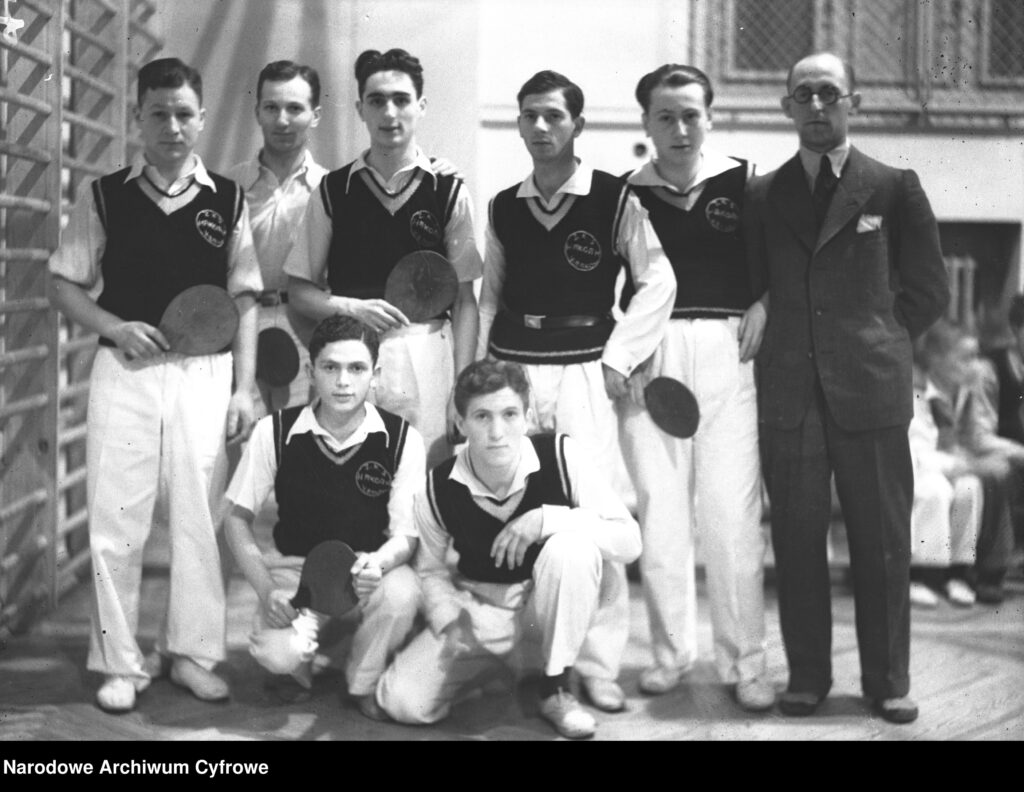
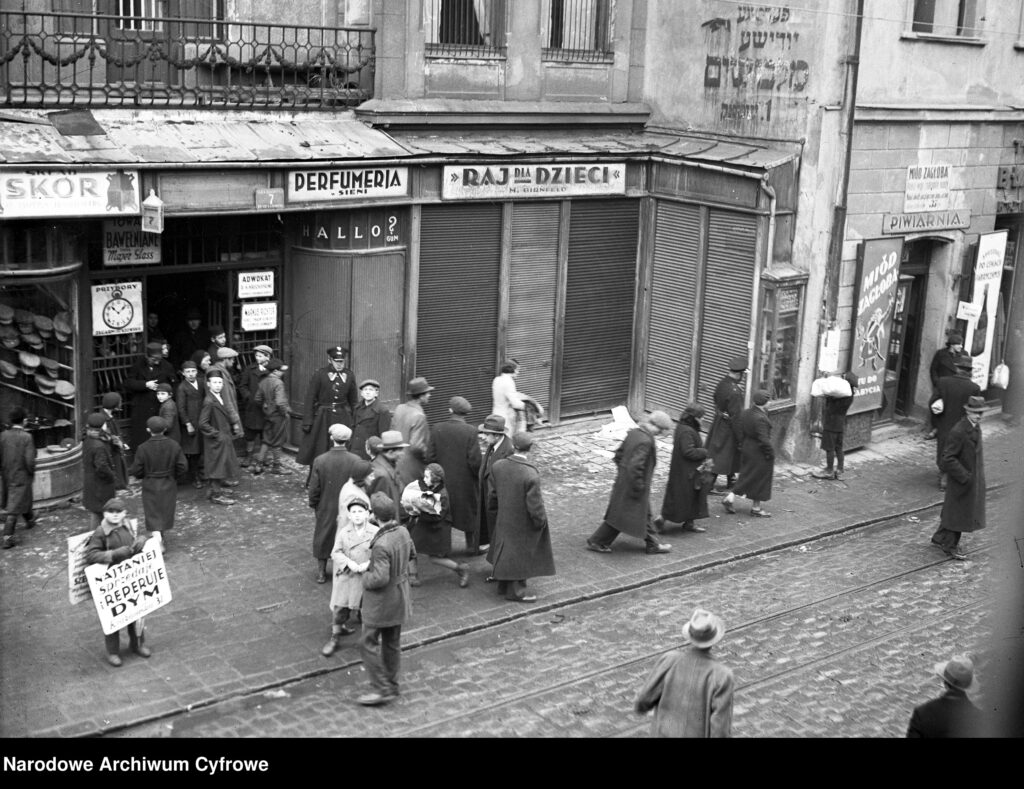
Before World War II, Kraków was home to one of the oldest and most vibrant Jewish communities in Poland. Around 60,000–70,000 Jews — nearly a quarter of the city’s population — lived and worked here, particularly in the historic district of Kazimierz, though Jewish life existed throughout the city. Commerce, education, religion and culture flourished side by side, shaping Kraków’s unique multicultural identity.
The community was diverse. Some families maintained Orthodox traditions and spoke Yiddish; others were fully assimilated, active in Polish cultural and academic life. Many considered themselves both Jewish and Kraków citizens.
Early Persecution (1939–1940)
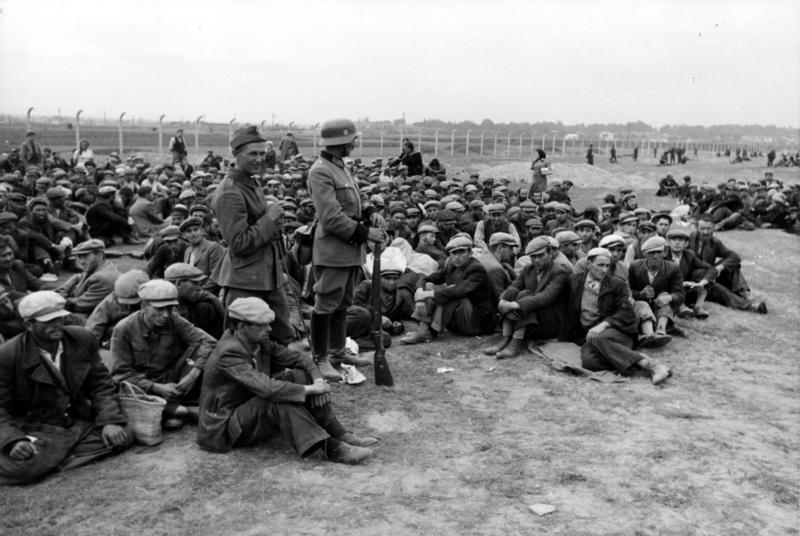
Source: German Federal Archives (Bundesarchiv, Bild 121-0295), CC-BY-SA 3.0.
When German forces entered Kraków on 6 September 1939, persecution began immediately. Jewish property was confiscated, synagogues were desecrated, and access to public spaces was restricted — park benches, trams, and entire streets were labelled “for Germans only”.
Round-ups and arrests targeted Jewish men, many of whom were sent to temporary detention centres and forced-labour sites. In May 1940, the Nazis ordered mass expulsions from the city, aiming to reduce the Jewish population drastically.
By March 1941, around 15,000 Jews were still allowed to remain — and they were the ones forced into the new ghetto.
Creation of the Kraków Ghetto (March 1941)

In early March 1941, the German authorities ordered the creation of the Kraków Ghetto in the Podgórze district. By 21 March 1941, over 15,000 Jews from Kraków and neighbouring towns were confined there.
The enclosed area covered around 20 hectares, with 30 streets and about 320 buildings previously occupied by only around 3,000 people.
The ghetto was surrounded by a high wall topped with barbed wire, with sections shaped deliberately like Jewish tombstones — a chilling symbol of the fate intended for its residents.
Living Conditions in the Ghetto
Life inside the ghetto was defined by relentless scarcity and fear. Four to five people often shared a single small room. Poor sanitation and limited access to water led to outbreaks of disease, especially typhus.
Official food rations for Jews often fell to 200–300 calories per day, far below survival needs. Smuggling became essential — and dangerous. Any attempt to leave or return without a pass carried the risk of execution.
In 1942, the ghetto was effectively divided into sections for those deemed “fit for work” and those who were not — a segregation that preceded later selections and deportations.
Despite hunger, violence and constant surveillance, people held on to humanity through underground schooling, secret prayer, and small cultural gatherings. Preserving dignity became a form of resistance.
Deportations Before Liquidation (1942)
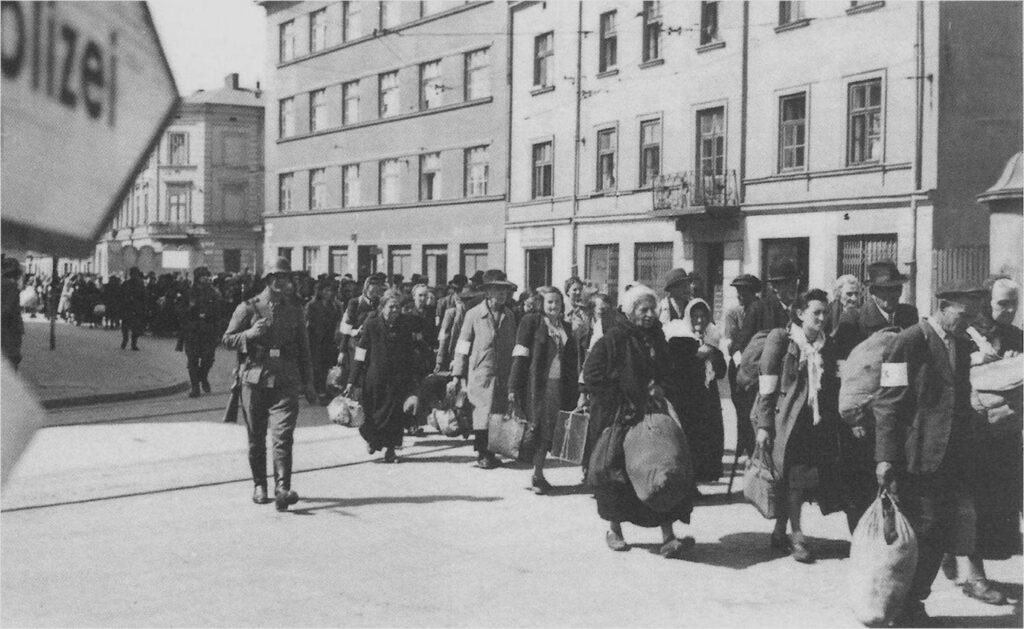
Source: United States Holocaust Memorial Museum / Institute of National Remembrance (Public Domain).
Amidst the terror, acts of courage and compassion emerged. In December 1942, the German pharmacist Tadeusz Pankiewicz, owner of the Pharmacy Under the Eagle, rIn the summer and autumn of 1942, large deportation actions reduced the ghetto’s population dramatically. Several transports were sent to the Bełżec death camp, where victims were murdered upon arrival.
These actions marked the beginning of the end: the final liquidation in March 1943 completed a process already underway for months.
Amidst terror, acts of defiance and solidarity emerged.
Resistance and Acts of Courage
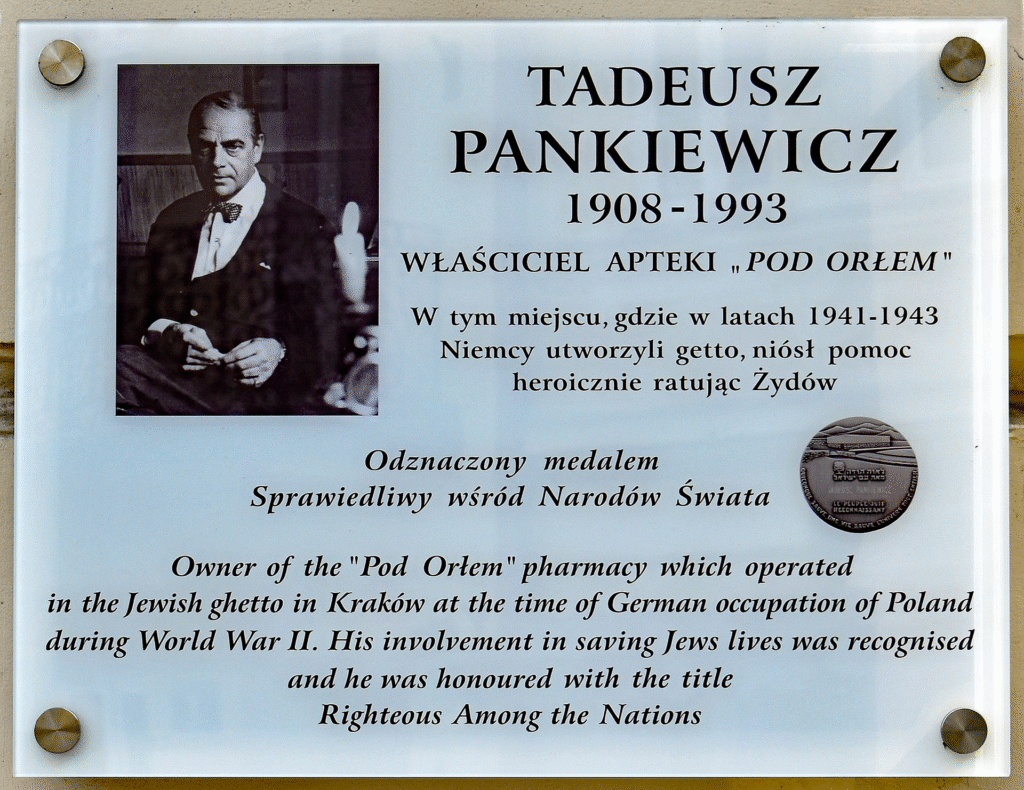
Photo by Zygmunt Put, Wikimedia Commons (CC BY-SA 4.0).
When the ghetto was established in March 1941, Polish pharmacist Tadeusz Pankiewicz — owner of the Pharmacy Under the Eagle on Ghetto Heroes Square — obtained permission to remain. His pharmacy became a lifeline: providing medicine, discreet assistance, and information to Jewish residents.
Resistance networks operated both inside the ghetto and outside its walls. Some Jews smuggled food or forged documents; others maintained contact with the Polish underground.
Meanwhile, at 4 Lipowa Street, Oskar Schindler used his factory to protect Jewish workers from deportation. Over time, his enamelware plant became a refuge disguised as a war-related enterprise, saving around 1,200 people.
Helping Jews was punishable by death — not only for the helper, but for their entire family — yet many still chose to help.
Liquidation of the Ghetto (March 1943)

Source: United States Holocaust Memorial Museum / Institute of National Remembrance (Public Domain).
After the war, the ghetto district lay in ruins. In the decades that followed, Kraków began to confront the memory of what had happened there. Today, Ghetto Heroes Square in Podgórze serves as a poignant memorial, marked by 33 empty metal chairs symbolising the void left by thousands of lives extinguished.
Remembrance and Legacy
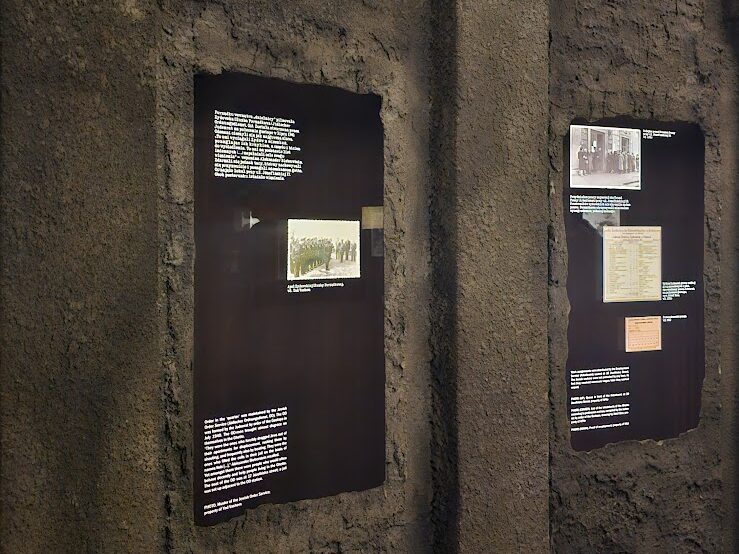
After the war, the former ghetto district lay in ruins. Today, the memory of its victims is preserved through several key sites.
At Ghetto Heroes Square, 33 large steel chairs face the empty space — with 37 smaller chairs nearby — symbolising both the loss and the memory of those who once lived here. The Pharmacy Under the Eagle has become a museum dedicated to the courage and compassion shown amidst the ghetto’s darkest days. Nearby, the Oskar Schindler’s Factory Museum tells the broader story of Kraków under Nazi occupation and the people who survived thanks to acts of resistance and aid.
Together, these places form the Memory Trail, linking locations where history remains inscribed into Kraków’s streets and buildings.
More About Kraków’s Wartime History
This article is part of the History Section of Schindler’s Factory Visitor Guide, dedicated to exploring Kraków’s wartime past.