
Kraków During World War II: Life Under German Occupation
Before the War
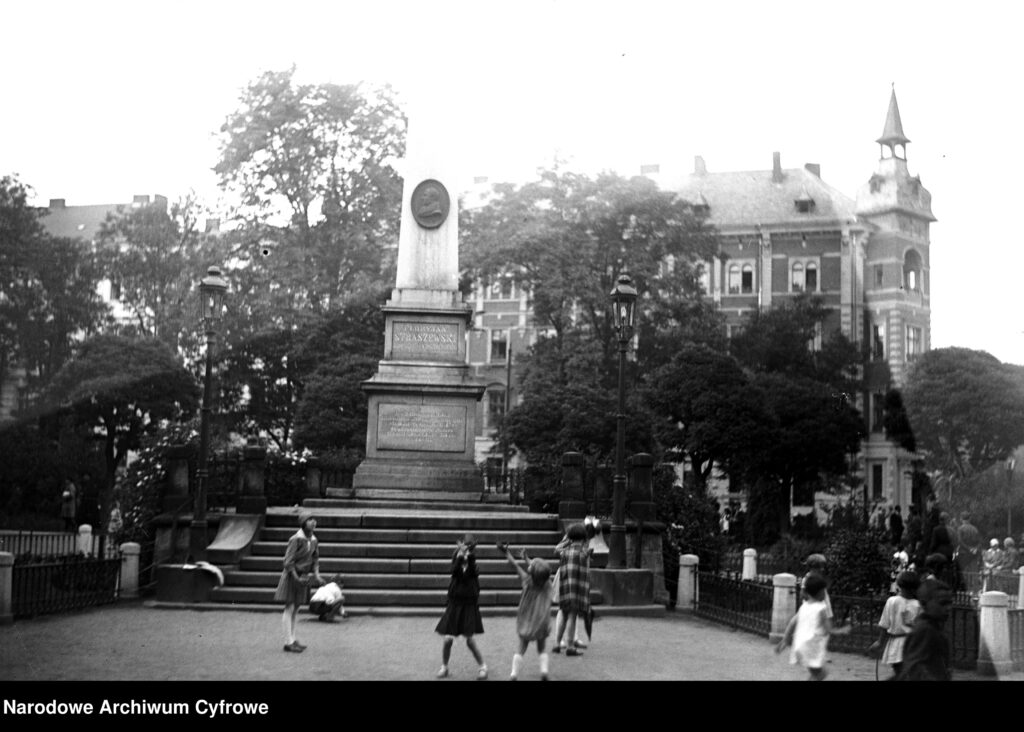
Before World War II, Kraków was a thriving cultural and intellectual centre of southern Poland. With a population of around 250,000, it was home to a diverse community — about 75% Polish, 25% Jewish, and a small number of Germans and Ukrainians. The city’s Jewish residents played an important role in its economic, artistic, and spiritual life, running businesses, publishing houses, and synagogues that contributed to Kraków’s vibrant atmosphere.
The interwar years brought a sense of optimism and growth. Cafés buzzed with conversation, theatres and cinemas flourished, and artists from all over Poland gathered here to exhibit their work. The city blended tradition and modernity — trams rolled past Gothic churches, and new districts expanded beyond the medieval walls.
It was also a city of learning and faith, home to the Jagiellonian University, historic churches, and the royal Wawel Castle. Everyday life was marked by a unique coexistence of cultures and religions that had shaped Kraków for centuries — until September 1939, when the German invasion shattered that world forever.
The German Invasion and Occupation
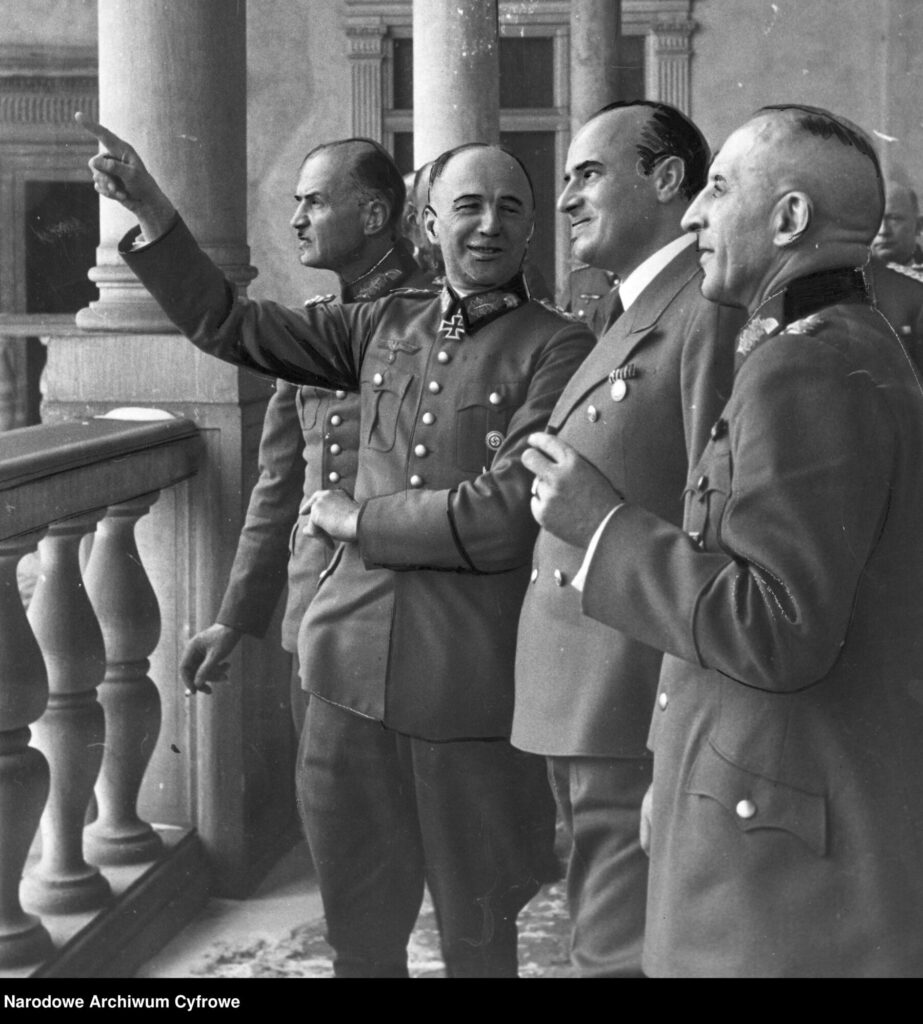
On September 6, 1939, German troops entered Kraków without major resistance. Soon after, the city became the capital of the General Government — the central administrative region of occupied Poland. Governor-General Hans Frank moved his headquarters into Wawel Castle, transforming the former royal residence into his personal palace and a symbol of Nazi power. For Kraków’s residents, seeing the castle — a centuries-old emblem of Polish identity — turned into the seat of the occupier was a profound humiliation.
The Germans established administrative offices, courts, and Gestapo headquarters in central Kraków, turning once-familiar buildings into centres of oppression. Polish and Jewish families were evicted from central districts as the occupiers turned parts of the city into “German zones” reserved for settlers and officials.
German authorities quickly implemented racial laws, mass arrests, and confiscations of property. Public life was restricted, Polish institutions were closed, and Jewish citizens were gradually isolated and deprived of rights. Many Poles were imprisoned or executed in places like Montelupich Prison, one of the most feared sites of Nazi terror in the city.
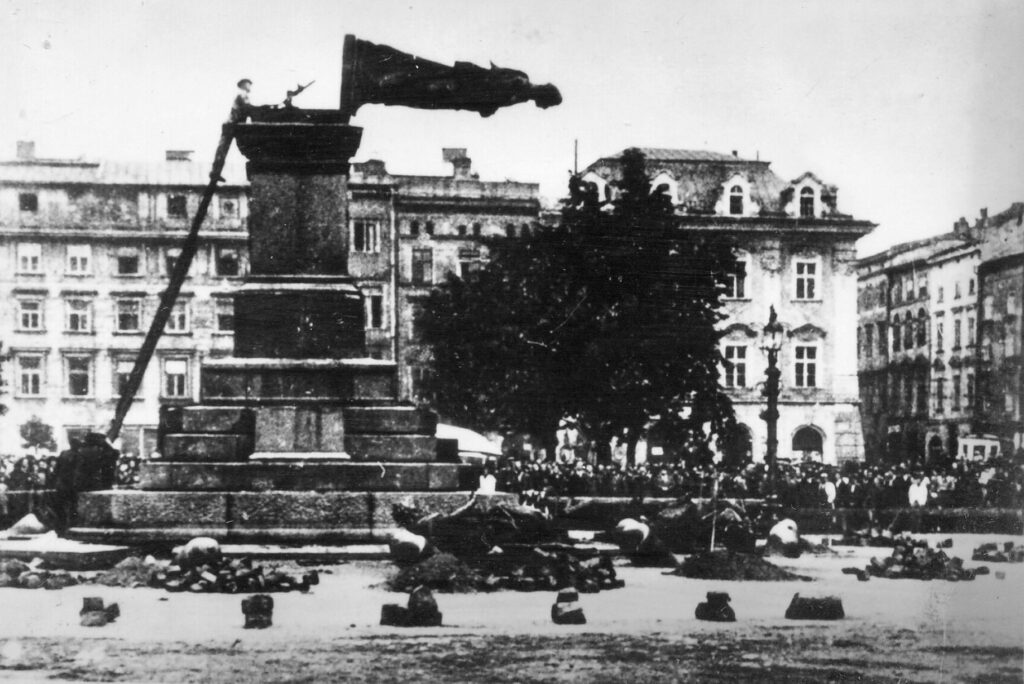
Everyday Life Under Occupation
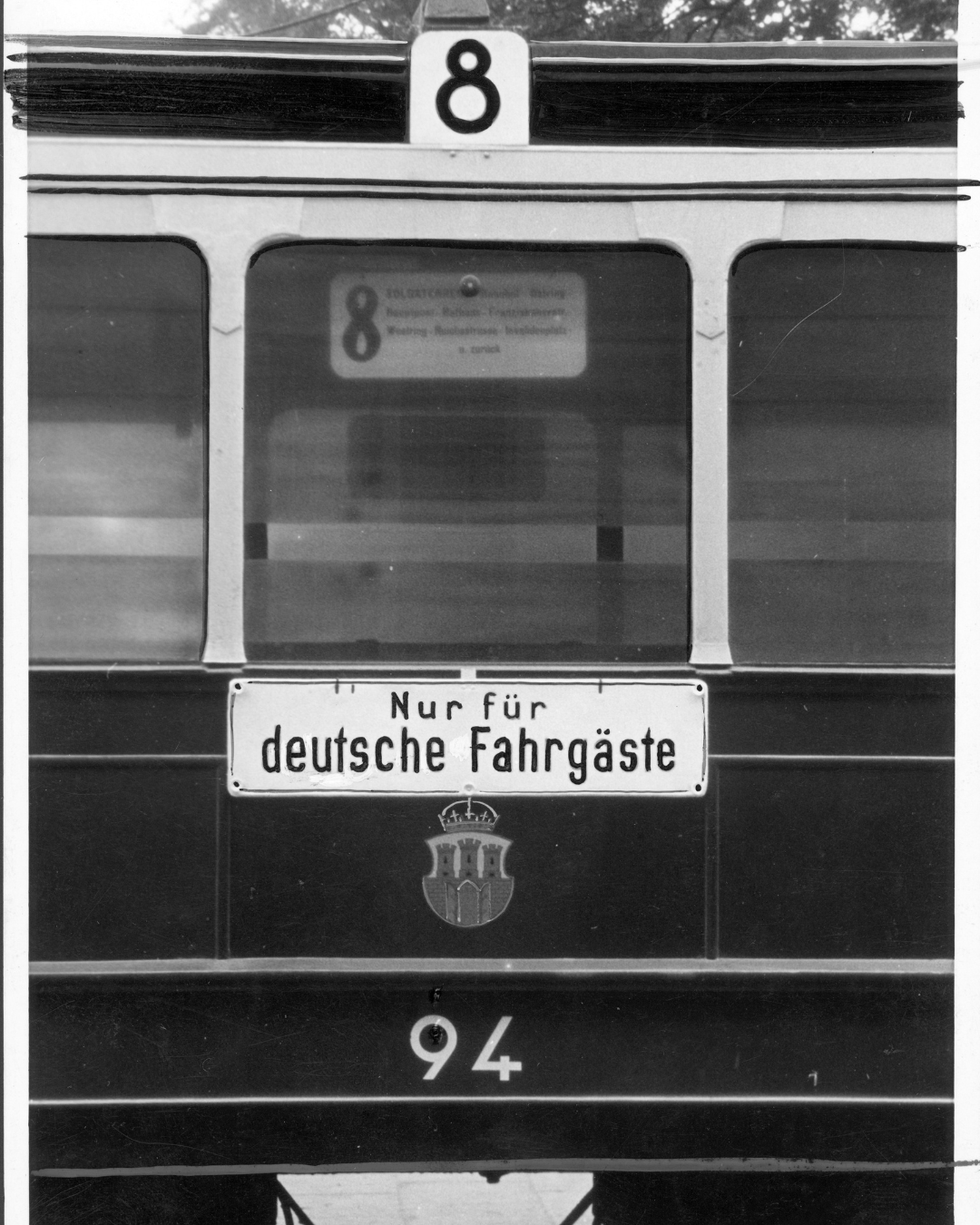 Tram type SN3 (no. 94) on line 8 with a sign reading “Nur für deutsche Fahrgäste” (“For Germans only”), Kraków, September 1941. Public domain / National Digital Archives, ref. 3/2/0/-/7934/1.
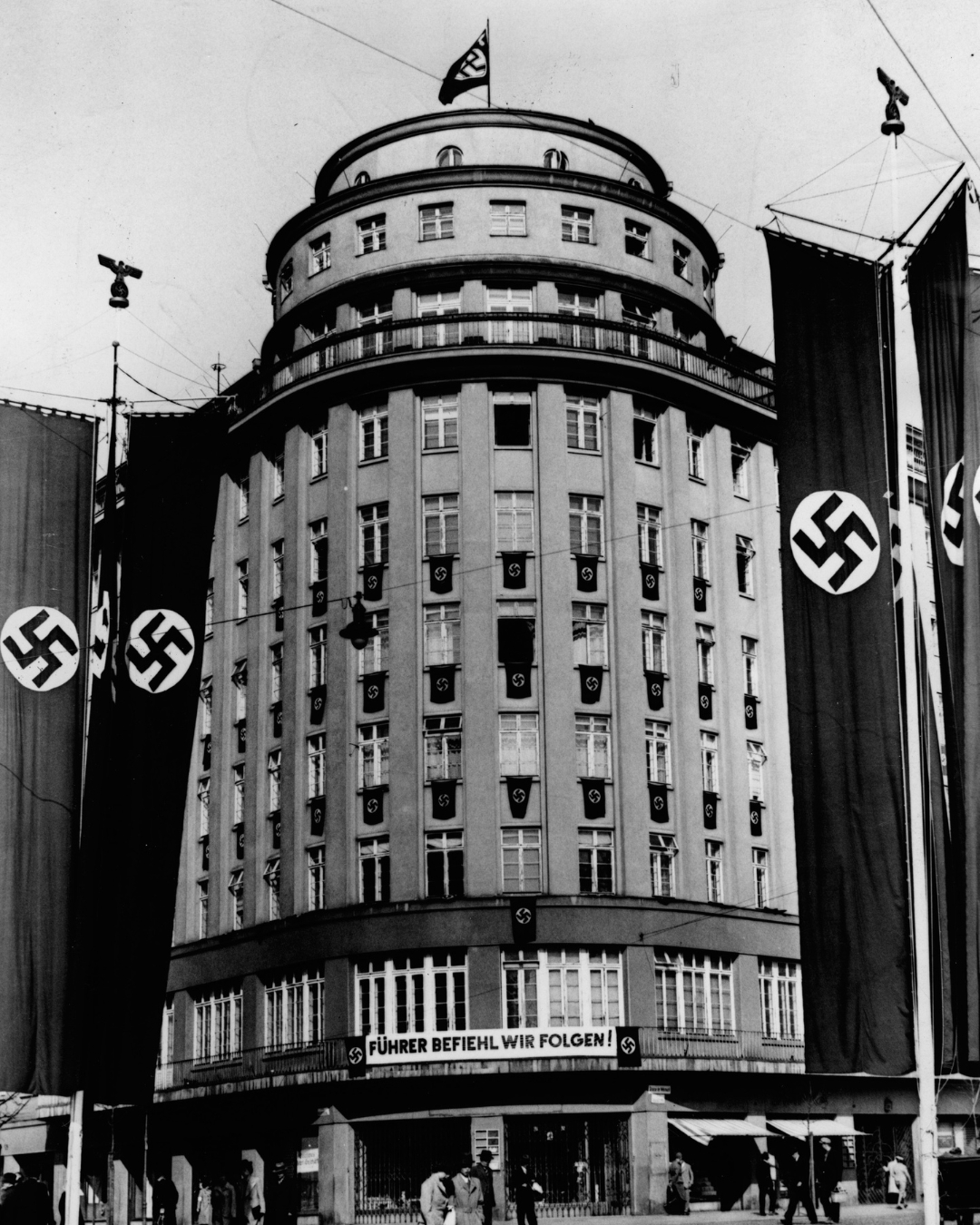 The headquarters of the Propaganda Centre of the General Government on Basztowa Street in Kraków, exterior view. Public domain / National Digital Archives, ref. 2-11451.
Life in occupied Kraków was marked by constant fear, hunger, and repression. Polish intellectuals, clergy, and community leaders were targeted for arrest and execution. The Nazi authorities introduced food rationing, curfews, and collective punishments.
As the occupation deepened, forced labour became one of its defining features. Both Polish and Jewish residents were taken from their homes and streets and sent to work for the German war economy. Many Poles were deported to Germany, while others were forced to work locally in factories and workshops seized by the occupiers.
Among these sites was the Płaszów concentration camp, established in 1942 on the outskirts of Kraków. Initially a forced-labour camp for Jews from the liquidated ghetto, it later held Polish prisoners as well. Conditions were brutal — exhaustion, violence, and executions were daily occurrences.
Factories connected with the Nazi administration were often part of this system of exploitation. Oskar Schindler’s Deutsche Emailwarenfabrik was a rare exception — while it initially relied on forced labour like many others, it later became a place of protection for more than a thousand Jews whom Schindler saved from deportation and death.
The Kraków Ghetto

In March 1941, the German authorities established the Kraków Ghetto in the Podgórze district, forcing more than 15,000 Jews into a small, walled area. Families were uprooted from their homes and crammed into overcrowded apartments, with little food, no freedom, and constant fear. The ghetto’s walls, topped with barbed wire and shaped like Jewish tombstones, became a chilling symbol of persecution.
Life inside was marked by hunger, disease, and brutality, yet many tried to preserve dignity through underground education, cultural activities, and mutual aid. In March 1943, the ghetto was liquidated — thousands were murdered in the streets or deported to the Płaszów camp and later to Auschwitz-Birkenau.
Resistance and the Underground
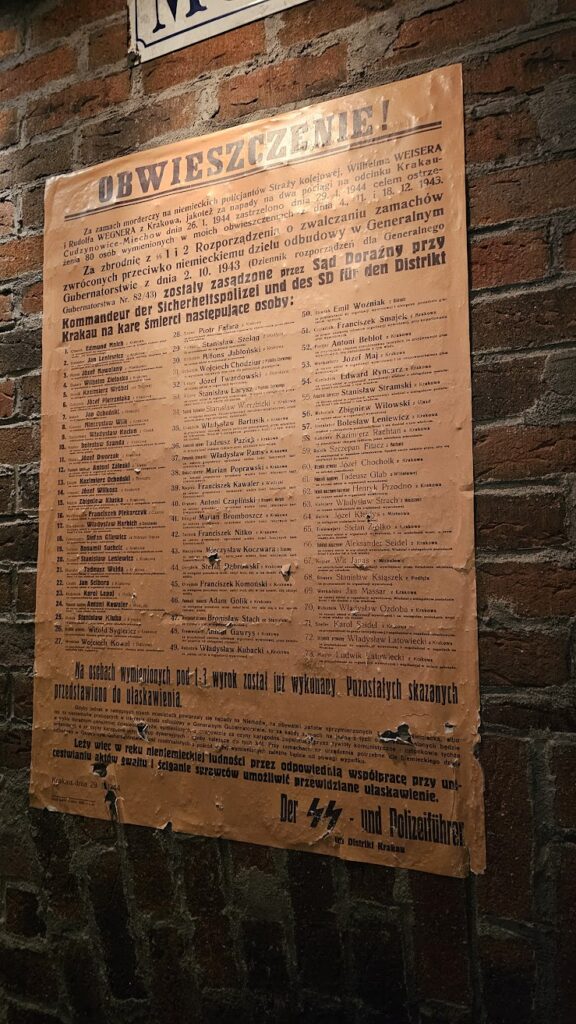
Despite the heavy presence of Nazi authorities and constant surveillance, Kraków remained home to an active underground movement. The city was the administrative heart of the General Government, with the seat of Governor-General Hans Frank established on Wawel Hill — a symbolically shocking act for Poles, as the royal castle had long represented national sovereignty. Because of this concentration of German power, open resistance was extremely dangerous and rare.
Nevertheless, clandestine efforts took root soon after the occupation began. Secret organisations formed as early as late 1939, later merging into the Home Army (Armia Krajowa) and other structures of the Polish Underground State. They focused on intelligence gathering for the Allies, producing and distributing illegal newspapers, and organising secret education to preserve Polish culture and language, both banned by the occupiers. Students and professors from the Jagiellonian University played a key role in maintaining underground teaching after many academics were arrested and deported to concentration camps in the early months of the war.
Armed operations within Kraków were limited due to the risk of brutal retaliation. Still, acts of sabotage, courier work, and intelligence operations continued. In 1944, members of the resistance attempted to assassinate Wilhelm Koppe, the Higher SS and Police Leader in the General Government — an action that, although unsuccessful, demonstrated the courage of the local underground.
Within the Kraków Ghetto, Jewish residents also created their own resistance networks. These began as welfare and educational initiatives but gradually turned toward armed struggle. Cooperation between Jewish and Polish underground activists, though difficult, did occur — especially in providing false documents, shelter, and escape routes. Many of these individual efforts went unrecorded, but they saved lives at enormous personal risk.
Even under constant threat of imprisonment, torture, and execution by the Gestapo, Kraków’s underground remained a symbol of defiance and moral resistance — proof that the city’s spirit of independence endured despite overwhelming terror.
Liberation and Aftermath
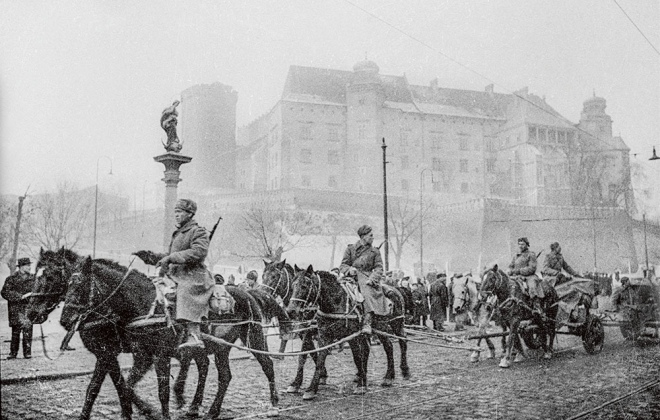
In January 1945, German forces began retreating from Kraków as the Soviet Red Army advanced from the east. Short but intense fighting took place on the city’s outskirts — around Płaszów, Bieżanów, and Nowa Huta — before Soviet troops entered the city on January 18, 1945.
Although German troops had prepared explosives to destroy Kraków’s historic centre and bridges, the rapid Soviet advance and local efforts prevented large-scale damage. The city, unlike Warsaw, was spared from total destruction.
However, liberation also marked the beginning of a new and complex chapter. The Soviet presence quickly turned into political control, bringing arrests of members of the Polish underground and the establishment of a communist regime aligned with Moscow.
After the war, Kraków became a place of remembrance. Sites connected to the occupation — such as the former ghetto, the Płaszów camp, and Schindler’s factory — were gradually preserved as memorials and museums dedicated to those who suffered and resisted.
Remembering the Past

Today, visitors can trace this chapter of history along Kraków’s Memory Trail, which links key wartime sites throughout the city.
To understand how the war transformed everyday life in Kraków, visit the Schindler’s Factory Museum, where the permanent exhibition “Kraków Under Nazi Occupation 1939–1945” tells the story through authentic rooms, photographs, and testimonies.
Explore Related Topics
This article is part of the History Section of Schindler’s Factory Visitor Guide, dedicated to exploring Kraków’s wartime past.